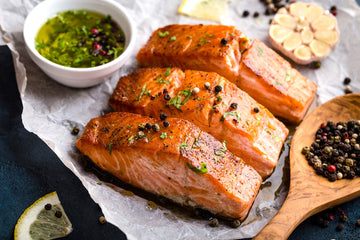
Salmon and Tuna often top the list when we think of globally renowned fish. They are celebrated for their distinctive taste and texture and their rich nutritional profiles, especially omega-3 fatty acids. However, India is home to an equally diverse and flavorful range of fish, some of which are underappreciated on the international stage. Fish like Himalayan Trout, Catla, Tilapia, Prawn, and Roopchand are affordable and locally accessible, but they also bring unique nutritional and culinary qualities to the table. This blog explores how these Indian fishes compare to their global counterparts.
Himalayan Trout vs. Atlantic Salmon: A Battle of the Cold Waters
The Himalayan Trout, cultivated primarily in the colder streams of Ladakh, Kashmir, Himachal Pradesh and Uttarakhand, is from the family of Salmon and is likened to Salmon in both taste and appearance. While Atlantic Salmon is hailed for its high omega-3 content (approximately 1.9 grams per 100 grams) and heart-healthy fats (U.S. Department of Agriculture, 2021), Himalayan Trout isn't far behind. A 2020 study by the Central Institute of Fisheries Education (CIFE) showed that Rainbow Trout raised in the Indian Himalayas contains approximately 1.4–1.8 grams of omega-3 per 100 grams, which is significant for a freshwater species. Additionally, trout is leaner and has a milder flavor, making it a great alternative for those who find Salmon too rich or fatty. From grilled fillets to delicate curries, trout adapts well to both Indian and Western cooking styles.
Catla vs. Tuna: Traditional Giant Meets Protein Powerhouse
Catla, or Catla catla, is one of the most widely consumed freshwater fish in Indian households, especially in Eastern and Southern regions. It is known for its large size, bony structure, and firm texture. Tuna, particularly varieties like Yellowfin and Albacore, are deep-sea predators rich in lean protein (around 25 grams per 100 grams) and low in fat, making them a global go-to for fitness enthusiasts (National Institutes of Health, 2020). While Catla may not match Tuna's lean protein-to-fat ratio, it holds its own nutritionally with about 19 grams of protein per 100 grams, along with essential minerals like selenium and phosphorus (ICAR-Central Inland Fisheries Research Institute, 2019). What makes Catla particularly stand out is its affordability and the emotional connection it has in many Indian households where fish curry is a staple. Moreover, its mild flavor makes it highly adaptable to both spicy and subtle preparations.
Tilapia: The Global Commoner with Local Popularity
Tilapia is perhaps the most comparable fish in this list to Tuna and Atlantic Salmon in terms of global distribution. Originally native to Africa and the Middle East, Tilapia farming has grown rapidly in India, especially in Andhra Pradesh and Tamil Nadu. Known for its mild taste, affordability, and fast reproduction rate, Tilapia is a common choice for aquaculture. Compared nutritionally, Tilapia has less omega-3 than both Tuna and Atlantic Salmon (around 135 mg per 100 grams), but it compensates with high protein content (approximately 20–22 grams per 100 grams) and a low saturated fat profile (Global Aquaculture Alliance, 2021). Its sustainability factor is a big win, too—it requires less feed and grows faster, making it environmentally efficient. Though it may lack the robust flavor of Tuna or the buttery richness of Salmon, it absorbs spices beautifully, making it perfect for Indian-style curries and grills.
Prawn vs. Tuna & Salmon: The Shellfish Exception
Although prawns are not technically fish, they are a critical part of both Indian and global seafood cuisine. In India, both freshwater and marine prawns like Tiger Prawns and Scampi are widely consumed and farmed. When compared to Tuna and Salmon, prawns offer an entirely different nutritional profile. They're low in fat, high in protein (around 24 grams per 100 grams), and an excellent source of selenium, iodine, and vitamin B12 (FoodData Central, USDA, 2021). However, prawns have higher cholesterol levels than most finfish, which may concern some individuals with cardiovascular issues. Still, newer studies suggest that dietary cholesterol doesn't impact blood cholesterol levels as significantly as once thought (Harvard T.H. Chan School of Public Health, 2020). Indian prawn curries and stir-fried preparations are not just delicious but also offer a light, high-protein alternative to meat-heavy meals.
Roopchand: The Indian Pomfret Lookalike with a Story
Often mistaken for Pomfret due to its oval shape and soft flesh, Roopchand, also called Chinese Pomfret or Butterfish in some regions, is an imported fish that has found firm footing in Indian kitchens over the last decade. Though not as nutrient-rich in omega-3 as Salmon or as protein-packed as Tuna, Roopchand is valued for its clean, white flesh, low bone content, and mild flavor. It’s an excellent introduction to fish for children or those who are not used to strong flavors. Nutritionally, it provides about 17–19 grams of protein per 100 grams and is low in fat, making it a healthy everyday option. Roopchand also holds masalas well, making it suitable for a variety of Indian preparations, from pan-fried fillets to tamarind-rich gravies.
A Cultural and Nutritional Perspective
While Salmon and Tuna enjoy a glamorous global status, Indian fish varieties offer something even more valuable—sustainability, local accessibility, and cultural relevance. Fishes like Catla and Tilapia are not just nutritionally respectable, but they are also closely tied to Indian food traditions and rituals. Himalayan Trout offers a near-premium experience comparable to imported Salmon, while prawns provide culinary versatility and protein-rich options for fast-paced urban diets. As consumers become more conscious about food miles, local ecosystems, and affordability, it’s important to look at Indian fish not just as alternatives, but as stars in their own right. Investing in local fish helps rural livelihoods, promotes sustainable practices, and brings fresh, healthy food to our tables without the environmental cost of transcontinental shipping.