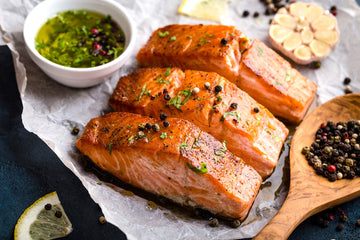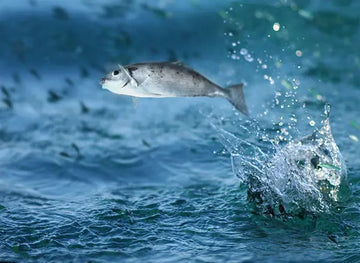
In today’s food landscape, “fresh” has become one of the most frequently used — and often misused — words. Whether it’s printed on supermarket labels or shouted across seafood counters, the term seems simple. But when it comes to fish, and particularly farm-raised fish, freshness isn’t just a selling point. It’s a science — a careful orchestration of timing, temperature, and transport.
The journey of a farm fish from the moment it is harvested to when it reaches your kitchen tells a story of precision, care, and logistics. To truly understand what “fresh” means, we must follow that story.
Timing: When the Clock Starts Ticking
Freshness begins the moment the fish leaves the water. In farm fisheries, the harvest is not an arbitrary event. It is a scheduled operation, often conducted in the early hours of the morning to take advantage of the cooler climate. This isn’t just for convenience — fish harvested during lower ambient temperatures experience less stress and maintain better quality post-harvest.
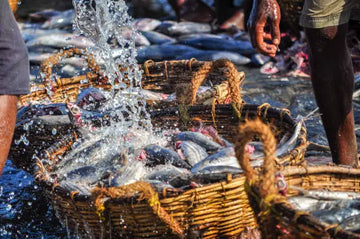
Once out of the pond, every minute counts. The fish are immediately moved to cleaning stations where they’re washed and sometimes gutted or filleted, depending on the delivery model. From here, a narrow window opens — a few hours during which the fish needs to be cooled, packed, and dispatched before its cellular structure starts to break down.
Compare this with wild-caught fish, which may spend a day or more on a trawler, then wait in auctions before reaching markets. Farm fish, with their planned harvests and streamlined logistics, often beat wild fish in terms of time from water to consumer.
Temperature: The Silent Protector of Freshness
Once the fish is harvested, temperature becomes the defining factor of freshness. It is essential to bring the fish down to a storage temperature between 0°C and 4°C as quickly as possible. This is done using ice or chilled water systems. What follows is a process called cold chain management — a method of maintaining low temperatures throughout handling, storage, and delivery.
Temperature fluctuations are the biggest enemies of fresh fish. A rise of even a few degrees for a couple of hours can accelerate bacterial growth and lead to spoilage. As Gram and Huss (1996) noted, many seafood-related safety issues arise not at the source, but during mishandling in storage and transport. This is why farms that are serious about quality invest in thermally insulated crates, real-time temperature monitoring, and fast dispatch systems.
Interestingly, fresh doesn’t mean never frozen. But if freezing is involved, it must be flash freezing — a rapid process that locks in texture and nutrition. However, truly fresh farm fish usually reaches local consumers without freezing, thanks to proximity and prompt delivery systems.
Transport: Completing the Freshness Chain
The final link in this chain is transport. Even the best timing and temperature management can be rendered useless if the fish is transported in substandard conditions. High-quality fish farms treat transport not as an afterthought but as an extension of their cold chain. This means using refrigerated vehicles or insulated containers that maintain ideal conditions until the fish reaches its destination.
Farm fish destined for supermarkets or direct-to-home delivery is often tracked. This not only ensures transparency but also allows for real-time responses to temperature deviations or delays. The goal is simple: the fish should arrive at the consumer’s door or local store in the same condition it was packed at the farm — cold, clean, and chemical-free.
Why Farm Fish Can Be the Freshest
Farm fish has often been looked down upon in comparison to wild-caught varieties, but when it comes to freshness, it might actually have the upper hand. Because farm fish are harvested on demand, there’s no guesswork involved. No long storage at ports or exposure to temperature changes during auctioning and resale.
A well-managed fish farm harvests only what it can deliver fresh within 24 hours. This results in fish that are not just “fresh” in name but in practice — soft yet firm in texture, naturally flavored, and nutrient-rich.
A Word of Caution: Fresh is a Responsibility
True freshness is not just about taste — it’s about food safety, nutrition, and ethical handling. It demands responsibility across the supply chain, from farmworkers to delivery agents. And as consumers, we must ask the right questions: When was this fish harvested? How was it stored? How far did it travel? Only then can we truly judge freshness.
Farm fish, when raised and handled with integrity, delivers an experience that’s not only fresh but trustworthy. In the world of perishable food, that kind of freshness is rare — and worth recognizing